Environmental
Science
Learn to read a landscape, build a record of evidence and explain what the observations can tell you.
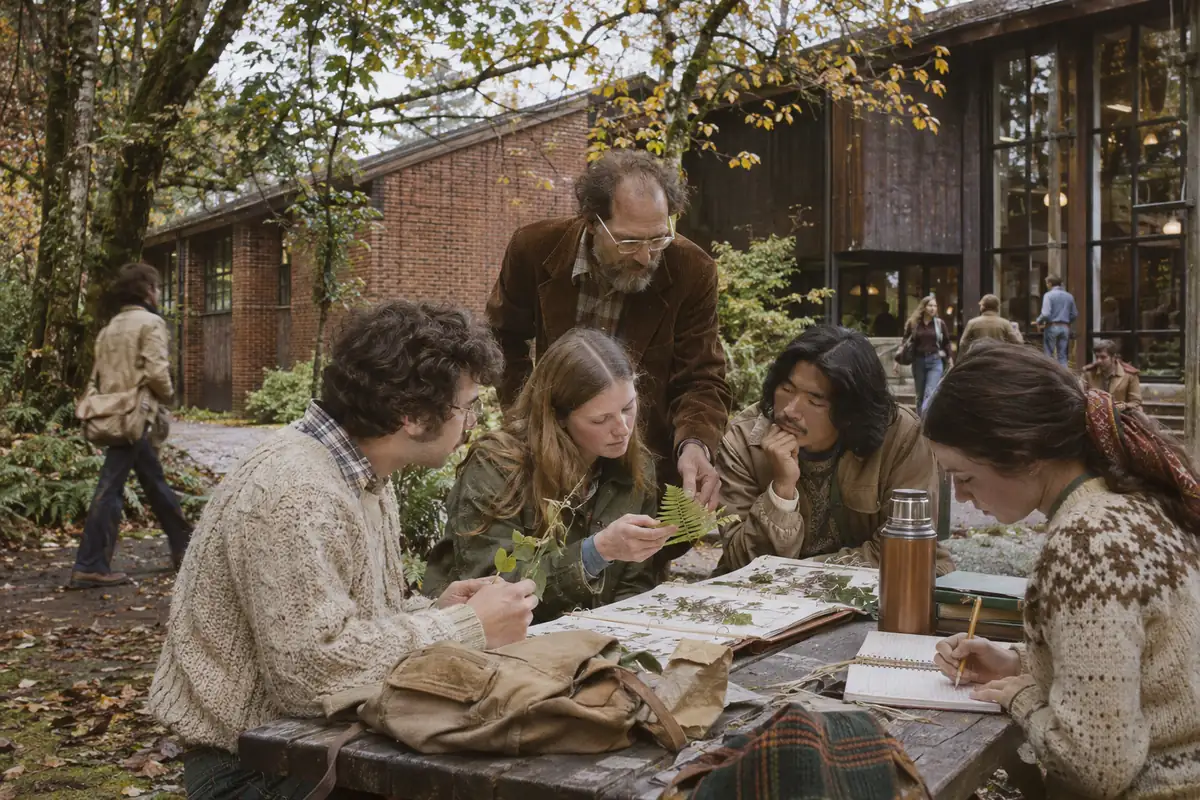
A connected view
of the natural world.
Water carries the history of a landscape. A plant community reflects the conditions around it. Environmental Science at Alderwick connects those observations with the biological and chemical methods that help explain them.
You will move between a seminar, laboratory work and supervised field study. Along the way, you will learn to ask a manageable question, choose a method, keep a useful record and distinguish a finding from an assumption.
Build a repeatable field record.
Interpret measurements and uncertainty.
Bring ecological and laboratory evidence together.
Explain a finding with care and clarity.
Depth in your field.
Room to look beyond it.
The degree combines the shared Alderwick core, a 42-credit major, study outside your division and free electives. Your major includes foundations, five sequenced environmental science courses and an approved related-study pathway.
Required courses
ENVS110Earth Systems
Trace connections among water, soil, climate and living communities using maps and introductory field observations. 3 credits. Prerequisites: none.
BIOL110Biology of Living Systems
Investigate cells, populations and ecological interactions through integrated discussion and scheduled laboratory work. 3 credits. Prerequisites: none.
CHEM110Chemistry of Everyday Systems
Use molecular models, measurement and laboratory observations to explain reactions in water, materials and living systems. 3 credits. Prerequisites: none.
ENVS150Field Observation
Keep repeatable field notes and design a small observation protocol at Fern Creek. 3 credits. Prerequisites: none.
ENVS220Ecological Methods
Compare vegetation, soil and water measures and evaluate the limits of field sampling. 3 credits. Prerequisites: ENVS150.
ENVS310Environmental Analysis
Interpret environmental measurements with uncertainty and document a transparent analytical workflow. 3 credits. Prerequisites: ENVS220.
ENVS410Integrated Field Research
Plan a team field investigation, review methods and connect observations across a landscape. 3 credits. Prerequisites: ENVS310.
ENVS490Environmental Science Capstone
Complete an independent environmental study with a research report, evidence appendix and public presentation. 3 credits. Prerequisites: ENVS410.
The sample related-study pathway adds WCON150, WCON220, EPOL150, EPOL220, DATA150 and DATA220: 18 credits connecting watershed study, environmental policy and data.
Browse the course catalogFour years, thoughtfully arranged.
Use this sample plan to see how the pieces fit. Electives are choices you make with your adviser; prerequisites are completed before the next course in a sequence.
| Semester | Courses and elective spaces | Credits |
|---|---|---|
| Year 1 · Fall | WRIT101, COMM105, ENVS110, Breadth elective, Free elective | 15 |
| Year 1 · Spring | PHIL110, HIST120, BIOL110, Breadth elective, Free elective | 15 |
| Year 2 · Fall | WRIT201, LIT130, CHEM110, ENVS150, Breadth elective | 15 |
| Year 2 · Spring | ARTS105, QUAN105, ENVS220, WCON150, Breadth elective | 15 |
| Year 3 · Fall | SCIE105, CIVI120, ENVS310, EPOL150, Free elective | 15 |
| Year 3 · Spring | ETHI210, GLBL150, ENVS410, DATA150, Free elective | 15 |
| Year 4 · Fall | WCON220, EPOL220, Free elective, Free elective, Free elective | 15 |
| Year 4 · Spring | ENVS490, DATA220, Free elective, Free elective, Free elective | 15 |
Start with what you can observe.
Fern Creek gives field study a continuing point of reference. One class might compare stream observations; another might examine vegetation, soil conditions or the way a sampling method changes a result.
In your capstone, you will develop an independent environmental study. The final work includes a research report, an evidence appendix and a public presentation, with a faculty supervisor helping you make the question achievable.
From the field notebook
Students in this autumn’s field group are building a shared record of Fern Creek, one observation visit at a time.
Read the fieldwork storyMake a plan in conversation.
An academic adviser helps you connect course choices, field opportunities and the question you may want to pursue next.
Dr. Leah Hart
Chair, Environment & Natural Systems
Alder Hall, Room 118
Watershed ecology and long-term field observation.
Contact Academic AffairsWhere your learning can lead.
Graduates can explore environmental project support, conservation program coordination or further study in a related field. Career Studio helps you describe your methods, present your project work and consider the preparation a particular next step may require.
Let’s talk about your direction.
Bring an interest, an unfinished idea or a question about studying environmental science.