Community Studio
Bring a method, a draft and an audience into the same project.
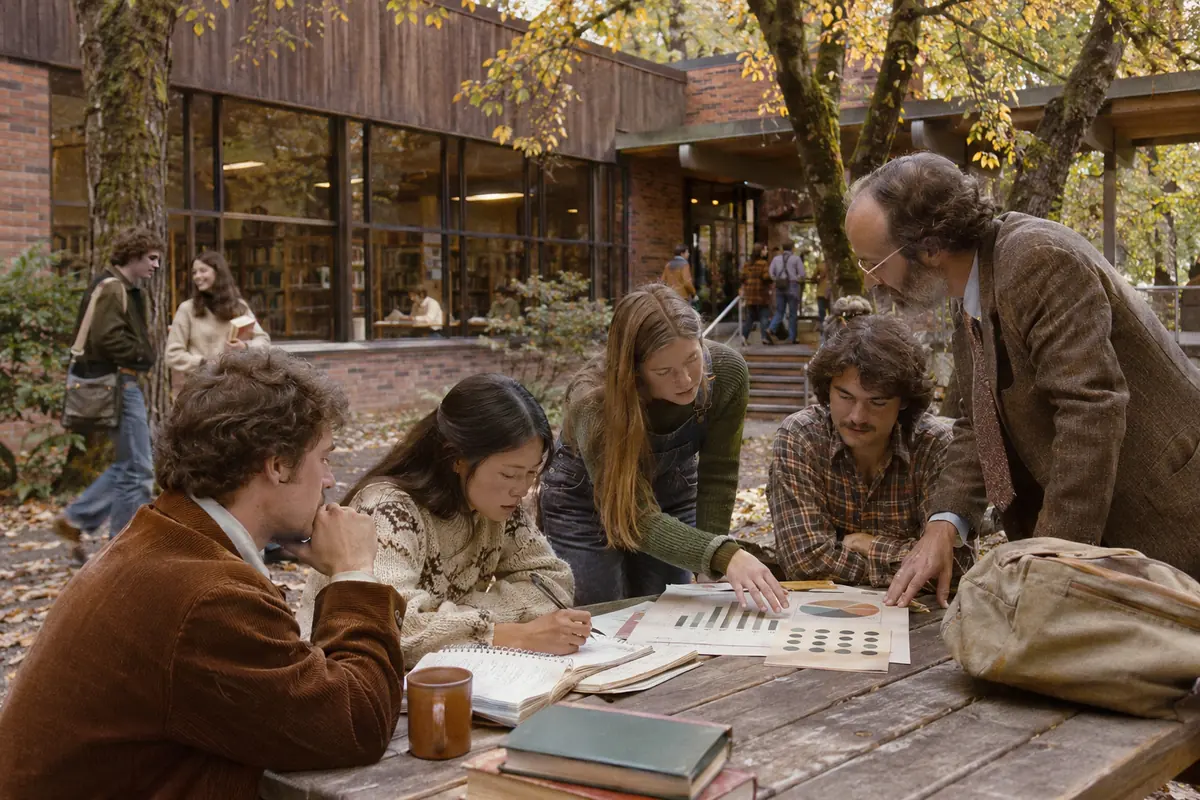
Begin with a well-framed question
Community Studio is an approach to project work rather than a promise of a placement. Students define a question, identify the audience and decide what kind of work could help someone understand the issue.
A project may use a research record, a visual explanation or a prototype. The teaching team reviews the scope, the information used and the responsibilities that accompany sharing the result.
A current classroom example
In the neighborhood-access exercise, data students work with an explicitly synthetic teaching dataset. They document the fields, compare possible questions and revise charts after other students explain how they read them.
Using a designed dataset lets the class focus on method without implying that a fictional number is a finding about a real neighborhood. The data dictionary stays beside the final explanation.
Four parts of a useful project
- Question: the specific thing you are trying to understand.
- Method: where the information comes from and how it is handled.
- Form: the report, chart, prototype or resource the audience will use.
- Review: what feedback changed and what the result cannot show.